

Reclaimed Wood Wall Nassau County | Custom Milled, Color-Matched & Hand Distressed
Most reclaimed wood installations fail at the same point — the cut edge. When you mill an old board straight, you expose fresh wood that’s a completely different color than the weathered face. The joint looks new. The whole wall looks assembled, not aged. That’s not what reclaimed wood is supposed to do. This project in Hicksville, Nassau County, is about solving that problem at every board, every joint, and every butt end — so the finished wall looks like it was installed generations ago. It’s the same standard Kevin brings to every custom millwork project across Nassau County.
The Problem With Reclaimed Wood — And How We Solved It
Reclaimed wood is inherently uneven. Boards that have been exposed to decades of weather, humidity, and use don’t come off the wall at uniform widths. If you install them as-is, the random gaps and irregular edges look sloppy — not charming. The solution is to mill every board straight on the table saw, creating a clean uniform random-width pattern where the boards sit flush and tight.
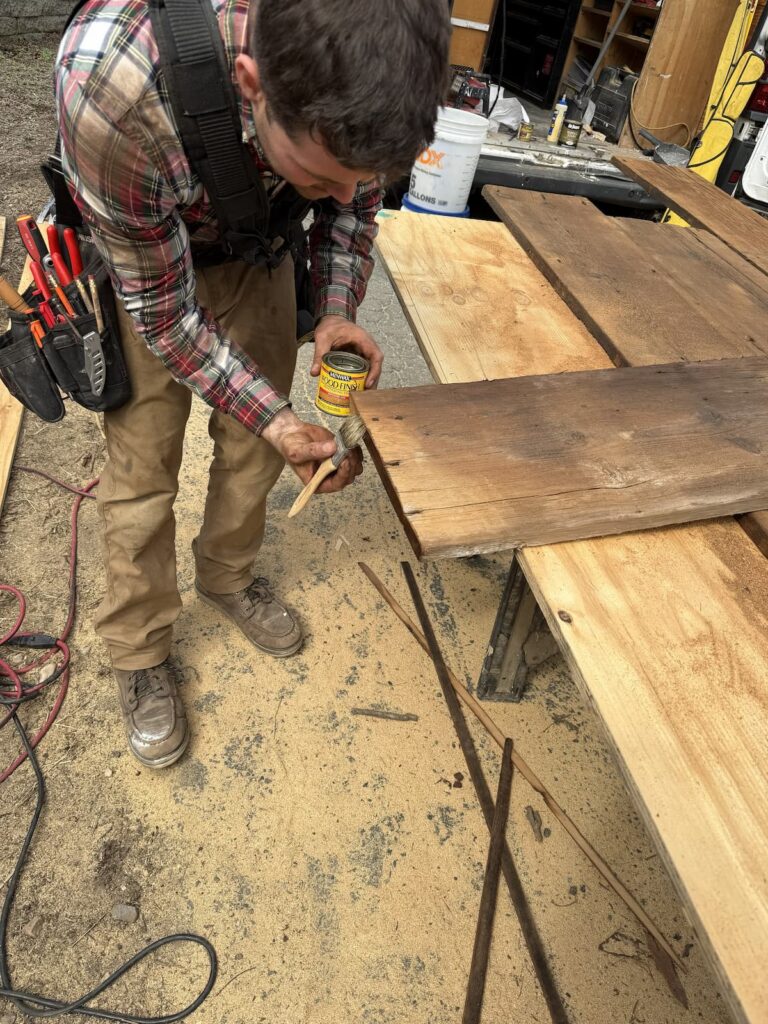
But milling creates a new problem: the cut edge is fresh wood. Raw. Light. It reads completely differently than the dark weathered face of a hundred-year-old board. Every joint becomes a visible line of new wood in an otherwise aged wall. Kevin solved this by staining every cut edge before installation — matching the Minwax color to the existing weathered tone, then hand rolling the edge to blend the transition. The result is a joint you have to touch to find. This level of prep work is what separates a reclaimed wood wall that looks intentional from one that looks like a DIY project. It is also the same level of finish carpentry and millwork that runs through every room we touch.
The Setup: Black Tar Paper Backing
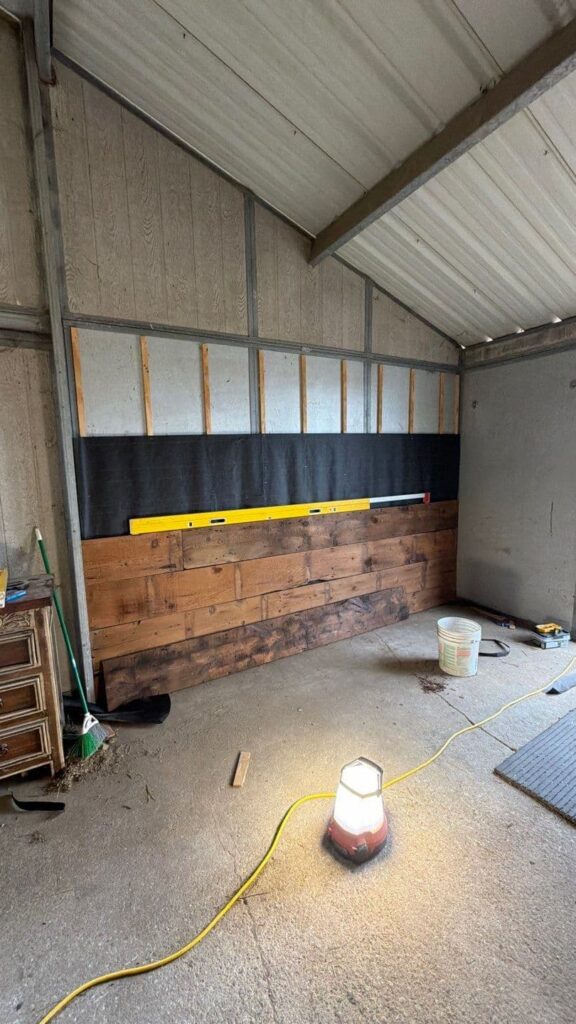
Before the first board went up, the wall was furred out with horizontal strapping and black tar paper was installed as the backing layer. This serves two purposes. First, it creates a true black shadow gap between boards — any gap between planks reads as deep shadow, not as a bright line of wall behind it. Second, it gives the installation a clean substrate that prevents moisture transfer and keeps the boards stable over time.
The strapping also allows the boards to breathe. Reclaimed wood moves with humidity. Nailing directly to a flat wall traps movement — over time the boards cup, split, or pull away. Strapping gives the wood room to expand and contract without telegraphing that movement to the face of the installation. This is the same structural thinking Kevin applies to every home remodeling project in Nassau County — the details behind the wall matter as much as what you see in front of it.
Hand Rolling the Edges Before Every Board Goes Up
After each board is milled and stained, the edge gets hand rolled — a small brush or pad is used to work the stain into the very corner of the cut edge where it meets the face of the board. This transition point is where most reclaimed wood installations show their age in the wrong way: a sharp line where the new stain meets the old wood. Hand rolling blends that transition so the edge reads as part of the board’s natural patina.
Hand Distressing the Butt Joints
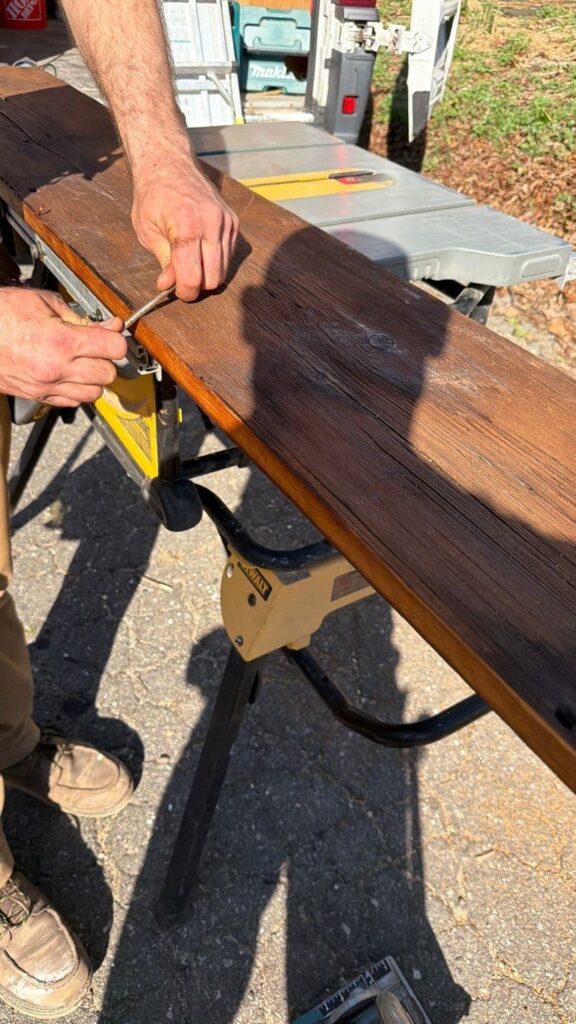
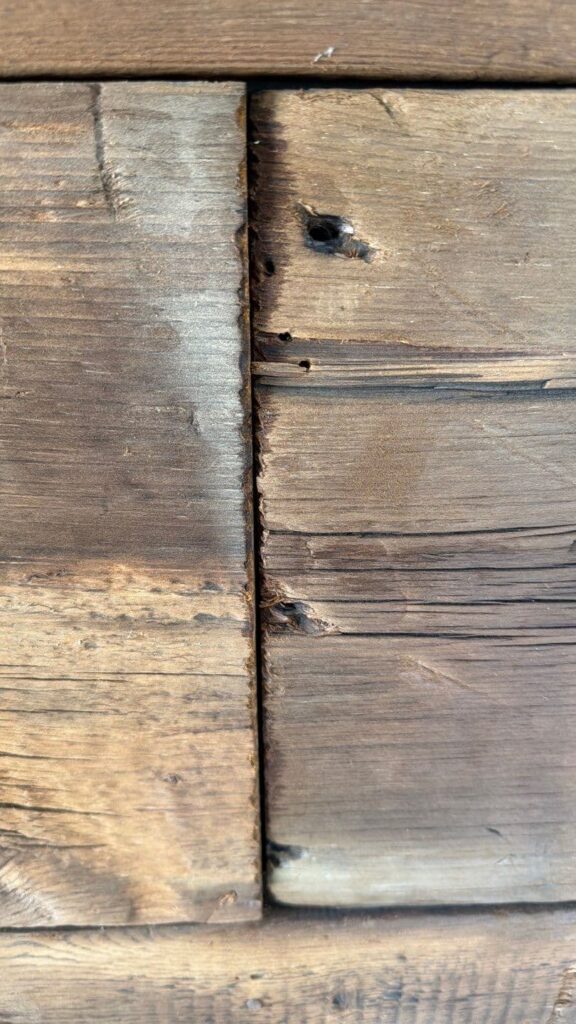
The butt joint — where two board ends meet vertically — is where most reclaimed wood installations give themselves away. Even with stained edges, the end grain of a freshly cut board has a different texture than the face of an aged board. It looks cut. Kevin hand distressed every butt joint after staining, using tools to replicate the surface texture of weathered wood — wire brushing, chiseling, and burnishing the end grain until it matched the character of the face.
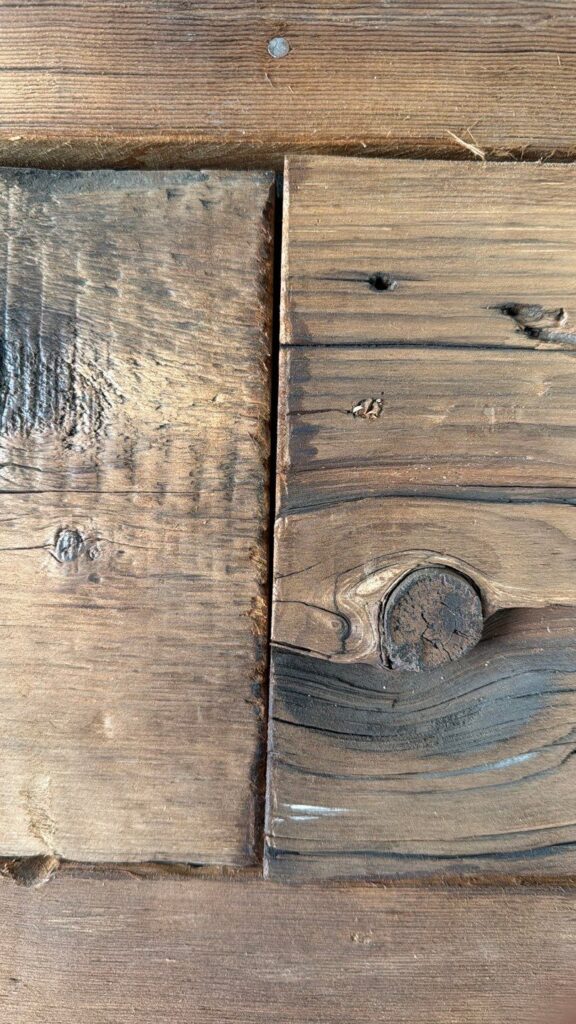
Up close, the vertical joint lines read as part of the wood’s natural character — a shadow line between two aged boards, not a seam between a weathered face and a fresh cut. That’s the standard every board is held to before it goes on the wall.
The Installation
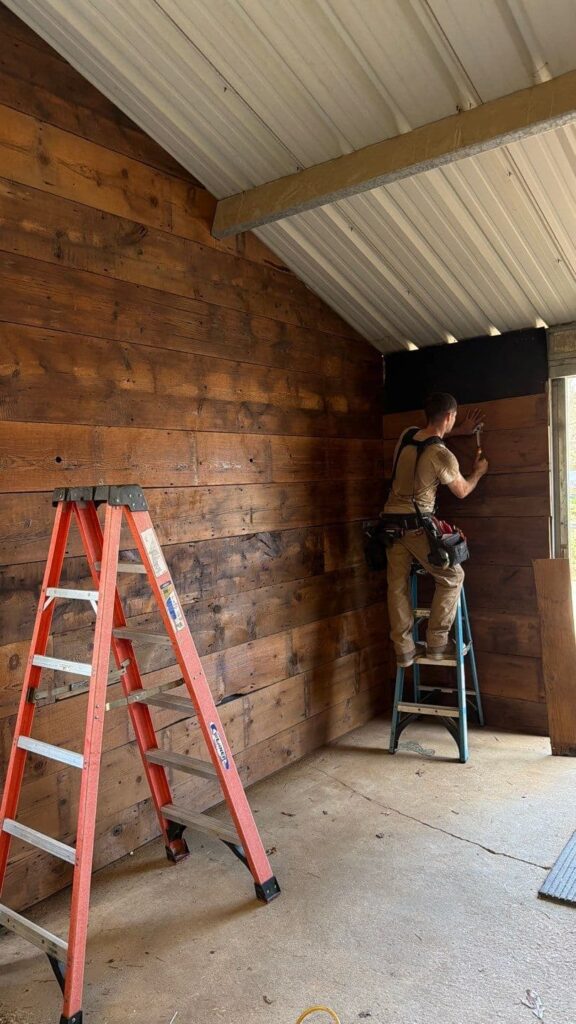
With the backing in place and every board prepped, the installation is methodical — working bottom to top, checking level constantly, sequencing the board widths so the random-width pattern doesn’t cluster same-width boards in the same area. The goal is a wall that reads as organic and aged, not as a pattern that repeats.
The Side Profile: Where the Milling Shows
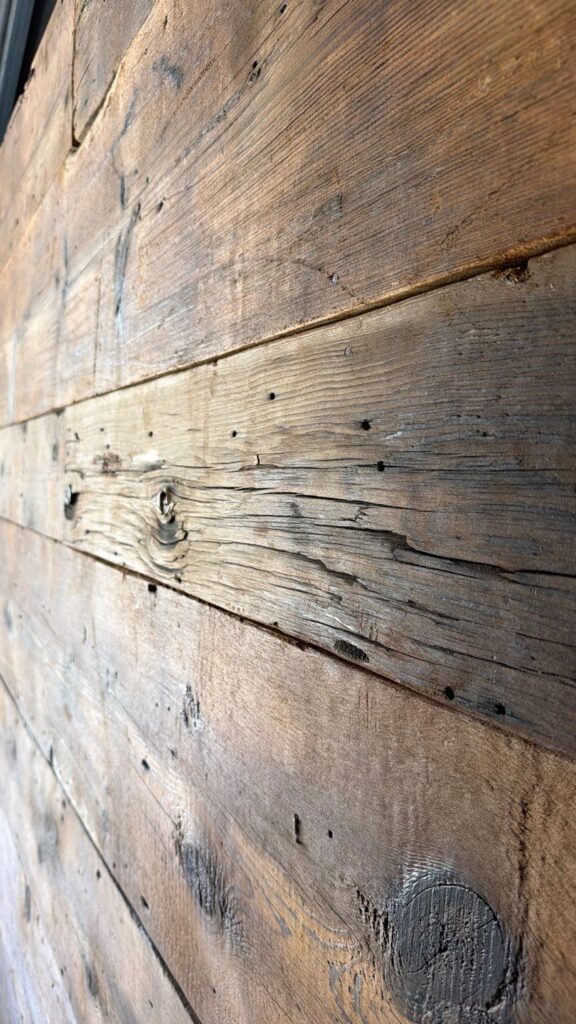
The side profile of a milled reclaimed board tells you everything about the prep work. A board that hasn’t been properly milled shows an uneven edge — high spots, low spots, a wavy line that creates inconsistent gaps across the wall. A properly milled board shows a clean straight edge that sits flush against the adjacent board, with a consistent reveal at the gap. That consistency is what gives the finished wall its professional quality.
What This Type of Work Actually Requires
A reclaimed wood wall done right is not a weekend project and it’s not a job for a finish carpenter who’s only installed new material. Working with reclaimed wood requires understanding how old wood moves, how to read the grain for stability, how to sequence the cuts so the random-width pattern reads as organic, and how to replicate the surface texture of aged wood on a fresh cut. These are skills that come from working with wood for decades — not from watching installation videos.
Kevin started in the trades in 1982 and has run his own jobs since 1986. 40+ years of hands-on experience. Every project across Nassau County, whether it’s a custom millwork installation, a fireplace wall, or a reclaimed wood feature wall, is built and finished by Kevin. Kevin works directly on every job — no subcontractors for finish work of this kind.
Frequently Asked Questions
Can you install reclaimed wood walls in a home interior?
Yes — and it’s one of the most impactful feature wall options available for Nassau County homes. Reclaimed wood adds warmth, texture, and depth that no manufactured product can replicate. The key is proper prep: the wood needs to be milled straight, the cut edges need to be color matched and hand distressed, and the backing needs to allow for wood movement. Done correctly, a reclaimed wood wall in a living room, bedroom, home office, or dining room is a permanent architectural feature.
How do you make reclaimed wood look like it was always there?
The answer is in the joints. Staining every cut edge before installation, hand rolling the stain to blend the transition, and then hand distressing the end grain to replicate the texture of the aged face — that’s what makes the difference. When every butt joint and every milled edge is treated this way, the wall reads as a single continuous surface of aged wood, not as a collection of boards with visible fresh cuts.
What does a reclaimed wood wall cost in Nassau County?
Pricing depends on the wall size, the source of the reclaimed material, and the level of prep work required. A feature wall with properly milled, color-matched, and hand-distressed reclaimed wood typically runs $4,000 to $12,000 installed depending on square footage and material quality. Kevin provides a detailed written estimate after seeing the space and the wood — no guesses over the phone. Call 516-470-1961 to schedule.
Do you source the reclaimed wood or does the homeowner?
Either works. Kevin can advise on sourcing reclaimed material or work with wood you’ve already acquired. The prep process — milling, staining, distressing — is the same regardless of where the material comes from. What matters is that the wood is structurally sound and dry enough to install without excessive movement. Kevin evaluates the material during the estimate.
How is a reclaimed wood wall different from shiplap?
Shiplap is new lumber milled to a consistent profile with a rabbeted edge — it installs quickly and reads as a clean, modern wall treatment. Reclaimed wood is salvaged material with genuine age, character, and history built into every board. The installation is more complex because the material is irregular, and the prep work — milling, color matching, distressing — is what makes it look authentic rather than assembled. The result is warmer, more textured, and more visually complex than anything new wood can produce.
Do you install reclaimed wood walls across Nassau County?
Yes — Creatively Done Homes Improvements Inc. serves all of Nassau County including Hicksville, Plainview, Syosset, Jericho, and Levittown. We’re based at 104 Jerusalem Ave. Hicksville NY 11801. Reclaimed wood walls are part of our broader custom millwork work — the same level of craftsmanship we bring to fireplace surrounds, wainscoting, and built-ins. See finished work in our project gallery.
Kevin handles every reclaimed wood wall project directly — from the estimate through the final board. Whether you’re in Hicksville, Plainview, Syosset, Jericho, or anywhere across Nassau County, call 516-470-1961 or request your free estimate. See finished work in our project gallery, or review permits and local building details in our remodeling resources.
